
Important Starter Links
DBPR (Florida Department of Business and Profession Regulation) – State Department to register trailer and mobile food permit
JHA (Jurisdiction Having Authority) – Local County/City Inspector to certify your trailer, usually done by a local fire marshal
Mobile Food Permit Requirements
Commissary Letter of Agreement
Launching a food trailer in Florida is a sizzling opportunity, fueled by the state’s endless sunshine, booming tourism, and vibrant street food scene. With over 130 million visitors annually flocking to beaches, festivals, and theme parks, the mobile food market here is exploding—projected to grow at 5%+ CAGR through 2030, mirroring national trends but amplified by Florida’s event-driven economy. Whether you’re slinging fresh seafood tacos in Miami or key lime pie bites in Orlando, this Florida-specific guide breaks down how to start a food trailer in Florida step by step. From DBPR permits to zoning hurdles, we’ve got you covered for a Sunshine State startup.
At American Food Trucks Factory, we craft custom food trailers built tough for Florida’s heat and humidity, with commercial grade materials and efficient AC systems to beat the heat. Check out www.americanfoodtrucksfactory.com or call 689-237-5310 for a free design consult tailored to FL regulations. We are located at 1726 N Kelley Avenue Kissimmee FL 34744
Why Start a Food Trailer in Florida in 2025?
Florida’s food trailer scene is on fire: South Florida’s “food truck frenzy” draws crowds to pop-ups and rallies, while Orlando’s theme park proximity offers steady gigs. Lower barriers than restaurants ($50,000–$150,000 startup vs. $300,000+), plus year-round operation thanks to mild winters, mean quick ROI—many hit break-even in 18-24 months with event bookings. Iconic successes like Miami’s Versailles-inspired trailers prove it: High margins (50-60%) from tourist markups.
Benefits tailored to FL:
- Tourist Traffic: Park near beaches or Disney for impulse buys.
- Event Boom: Festivals like EDC Orlando or Sarasota’s food truck invasions guarantee revenue.
- Flexibility: Chase hurricanes? Nah—dodge ’em while hitting farmers’ markets in Clearwater or St. Pete.
How to start a food trailer in Florida, Let’s roll.
Step 1: Research and Craft a Florida-Focused Business Plan
Validate your concept in the FL market, where Latin fusion and fresh catches dominate.
- Niche It Out: Go for FL faves like Cuban sandwiches, conch fritters, or plantain bowls. Use Google Trends for “Florida street food 2025” and scout Yelp for gaps in Tampa or Jacksonville.
- Audience & Spots: Target snowbirds in Palm Beach or families at Nokomis Beach. Prime locations: Tourist hubs like Main Gate Flea Market (near Disney), North Jetty Park rallies, or Avalon Park events.
- Zoning Check: FL cities dictate parking—e.g., no public right-of-way without permits; stick to metered spots, private lots (with owner OK), or designated zones. Avoid 100-500 ft from brick-and-mortar spots per local rules.
- Projections: Factor FL costs (trailer: $30,000–$100,000; events: $500–$3,000/day peak season).
Pro Tip: Use SCORE’s FL chapter for free templates. Include hurricane contingency in your SWOT.
FL startup budget snapshot:
Trailer Build: $30,000-$80,000 (Includes Absolutely everything Sinks, equipment, fire suppression, electrical)
Initial Inventory: $2000-$4000
Permits/Licenses: $1000-$2000
Marketing: $500-$2,000
Total: $33,500 – $88,000
Step 2: Tackle Florida's Legal and Regulatory Maze
FL’s regs blend state oversight with local quirks—non-compliance means fines up to $1,000. Starting a food trailer in Florida starts with DBPR’s Mobile Food Dispensing Vehicle (MFDV) license.
- Business Setup: Register LLC via Sunbiz.org (~$125). Get EIN from IRS (free).
- Key Permits:
- MFDV License (DBPR): For full-service trailers. Create online account at MyFloridaLicense.com; submit plan review if new/remodeled (menu, photos, commissary details). Fee: ~$347. Timeline: 1-2 weeks + inspection.
- FDACS Food Permit: If serving raw/prepackaged; apply 21 days pre-open (~$50–$350).
- Local Licenses: City/county business (~$50–$500), health (~$100–$500), zoning/parking (varies; e.g., Jacksonville waives street permits if state-licensed).
- Sales Tax: DOR registration ($5); collect 6-7% on sales.
- Food Handler Certs: Manager 1 person trailer ($50-$200)+ staff via ServSafe per person (~$15 each).
- Others: Fire cert for propane, liability insurance ($1,000–$2,000/year), DOT for towing.
- Commissary Rule: Use licensed kitchen for prep/waste—not home.
- Inspections: Opening sanitation/safety check mandatory; ongoing as needed.
Start with DBPR plan review, if you start early while your trailer is still being built, everything can be done and schedule to have your business up and running in as little as 4-6 weeks.
Step 3: Select and Customize Your Florida-Ready Food Trailer
Your trailer’s gotta handle FL’s salt air and 90°F days.
- Buy vs. Build: Used: $20,000–$50,000 (check DBPR license transfer). Custom: Ensures MFDV compliance.
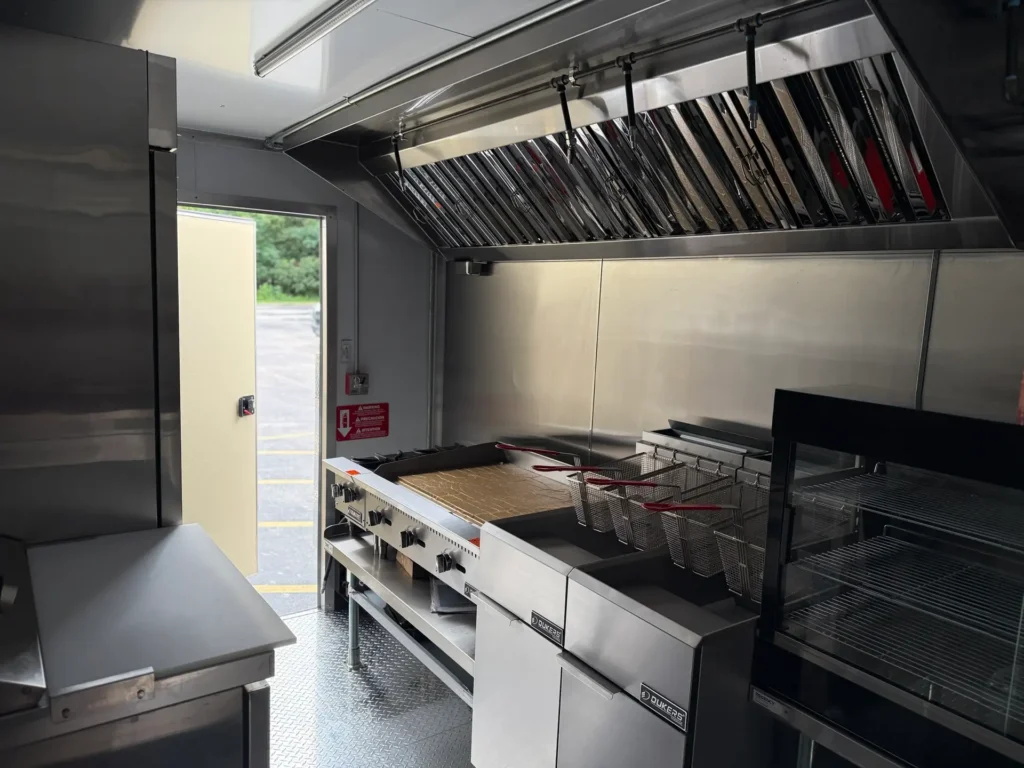
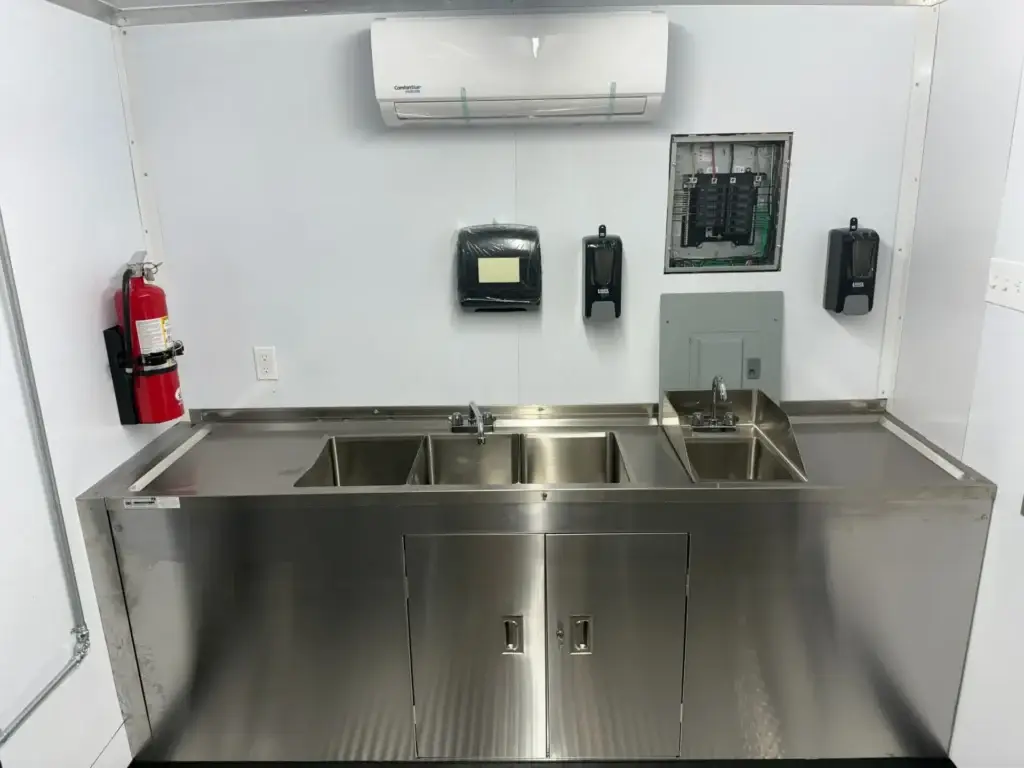
- Must-Haves: Stainless everything, exhaust hoods, 3-compartment sinks with drainboard, generator.
- Size: 14–20 ft is most common for urban maneuvering in traffic and food trailer park size requirements
American Food Trucks Factory specializes in FL builds—built for high humidity, compliant for DBPR. Visit www.americanfoodtrucksfactory.com or 689-237-5310 for quotes.
Step 4: Build a Menu and Source FL-Fresh Supplies
Keep it simple, seasonal: 5-8 items prepped fast for lines.
- Strategy: Highlight local—grouper sandwiches or mango smoothies. Test at pop-ups.
- Sourcing: FDACS-approved suppliers; hit Tampa’s Ybor for spices or Keys farms for tropicals. Target 30% food cost.
- Pricing: 3-4x markup; apps like Toast for tax tracking.
Step 5: Gear Up and Crew Your Trailer
Efficiency rules in FL’s fast-paced spots.
- Essentials: Commercial Refrigeration, POS, waste setup (~$5,000–$10,000).
- Staffing: Solo start; hire via Indeed for certified handlers. Train on FL heat protocols.
- Training: Hygiene first—DBPR loves it.
Step 6: Market and Launch in the Sunshine State
Get seen where tourists roam.
- Digital: Google My Business for “food trailer near me” in Orlando. Instagram reels of beachside serves (#FLFoodTrailer).
- Offline: Join FL Food Truck Association; book via Roaming Hunger for events like Taste of Sarasota or Jacksonville festivals.
- Launch: Free tasting at a Clearwater market—buzz spreads fast.
Allocate 20% budget; track with Analytics.
FL Challenges and Fixes
- Zoning Woes: Map city rules—e.g., no 500-ft restaurant buffers in Miami.
- Weather/Hurricanes: Awnings + generators; insure against storms.
- Competition: Differentiate with eco-friendly (solar trailers) or hyper-local menus.
American Food Trucks Factory includes service plans for FL maintenance.
Hit the Road in Florida Today
How to start a food trailer in Florida? Plan smart, permit up, and chase the crowds—your empire awaits amid the palms. With tourism rebounding, 2025 is prime time.
Partner with American Food Trucks Factory for your custom FL beast. Explore at www.americanfoodtrucksfactory.com or dial 689-237-5310. Let’s make it happen—your first beach bite is calling!
Informational only; verify with DBPR/FDACS. Updated November 10, 2025.