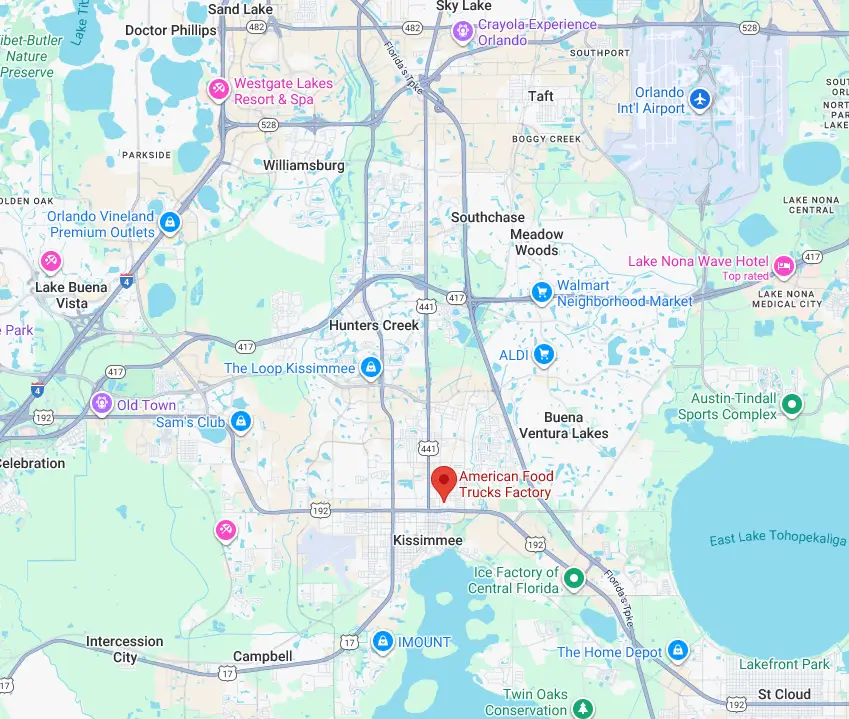
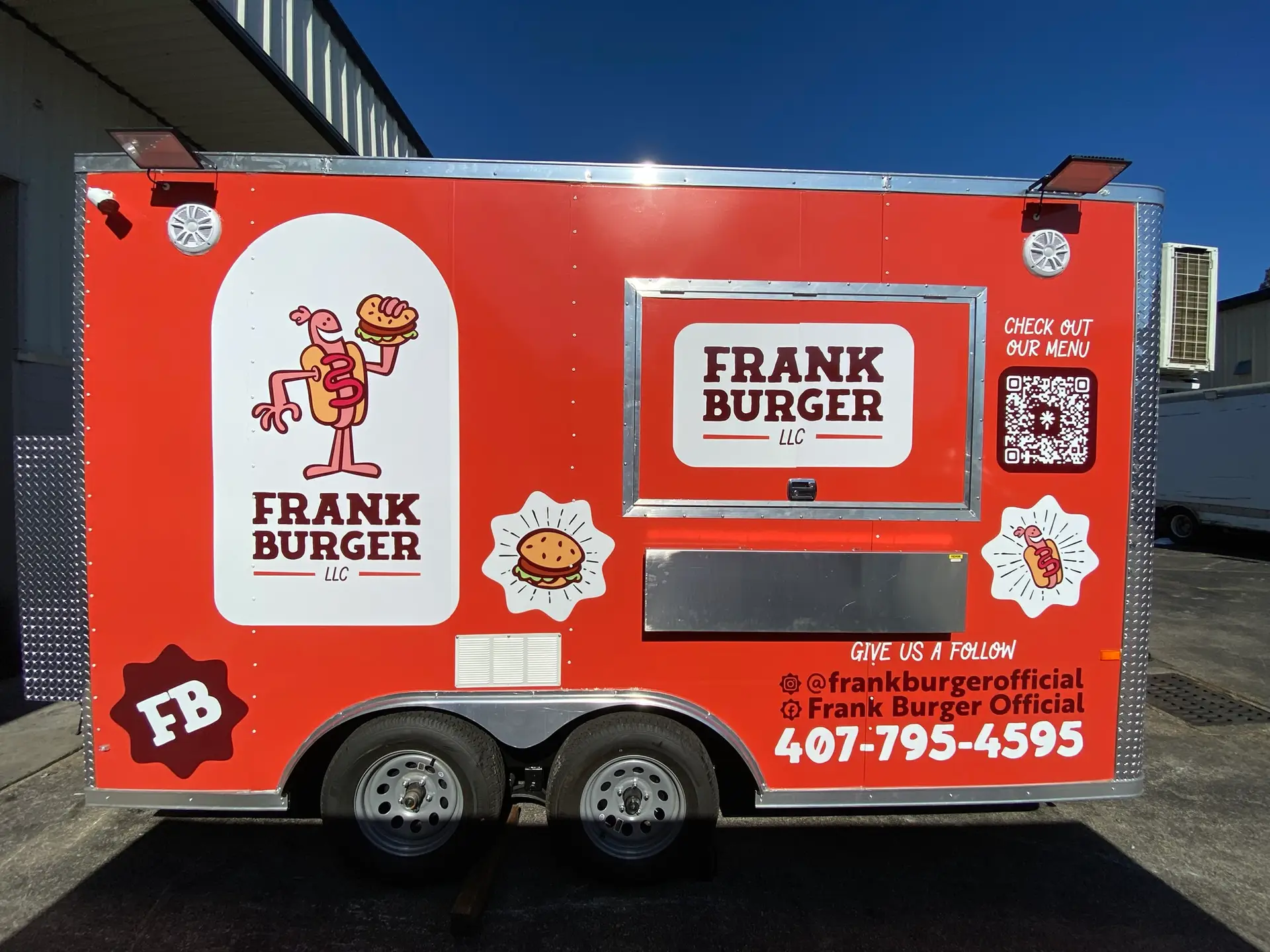
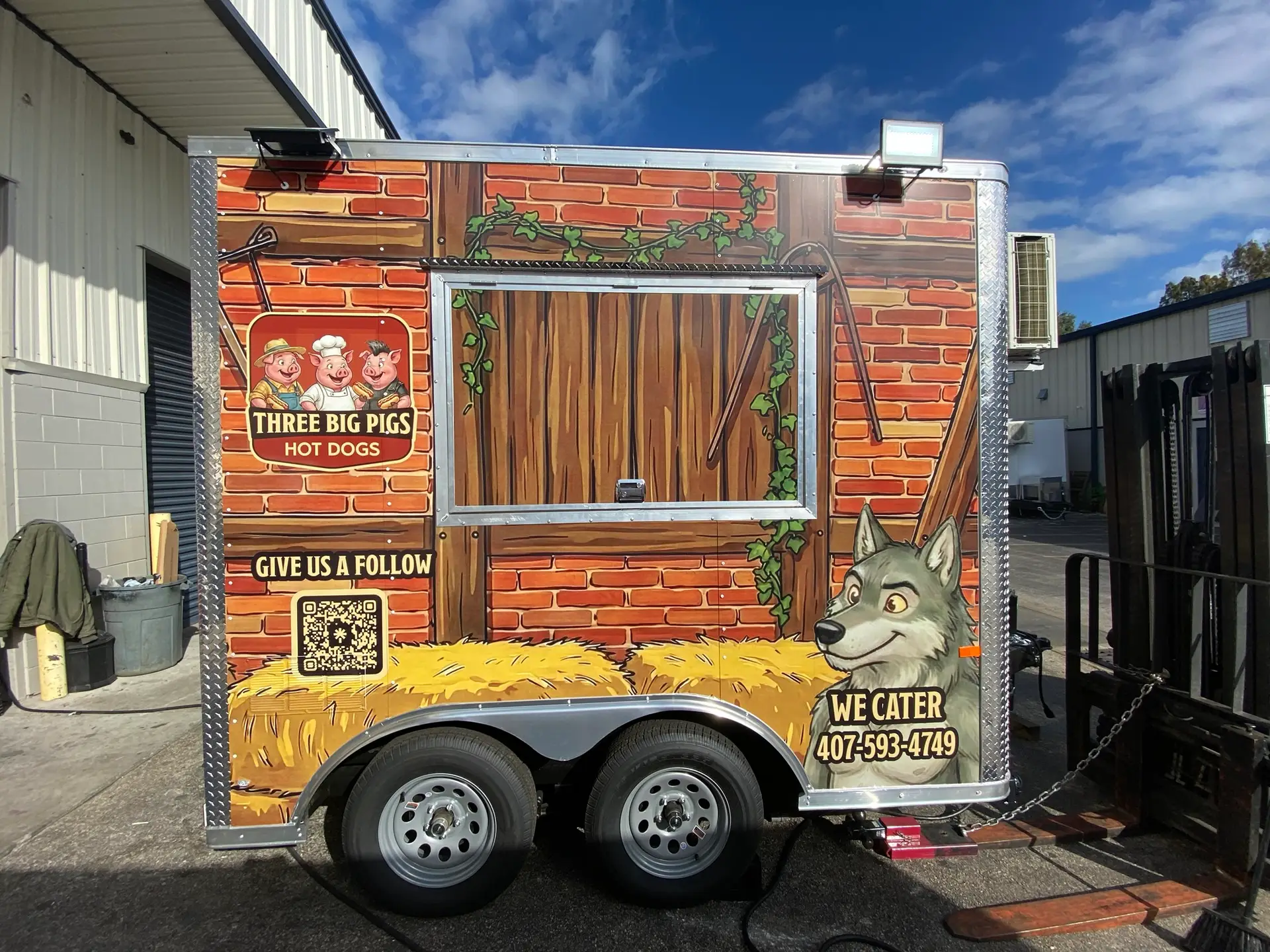
Looking for food trucks for sale in Kissimmee & Orlando? We build complete food trucks at our Kissimmee facility - 1726 N Kelley Ave. These are self-contained mobile kitchens on wheels, ready to drive to your location and start serving.
Most people shopping for food trucks want something that looks professional, doesn't need towing, and can move between locations easily during the day. That's what a food truck gives you - everything built into one vehicle that drives like a regular truck.
We've been building custom food trucks in Central Florida for over 12 years. Standard build time is 3-4 weeks from order to delivery. Not the 8-12 weeks most manufacturers quote.
Food Truck Options and Pricing
Our food trucks for sale range from 14 feet to 26 feet in length. Most people buy something between 16-20 feet because that gives you enough kitchen space without the truck being too big to park or maneuver.
That's more expensive than a food trailer, but you're buying the truck part too. You don't need a separate vehicle to tow it. You drive the food truck directly to your location.
What Comes Standard
Every food truck we build includes:
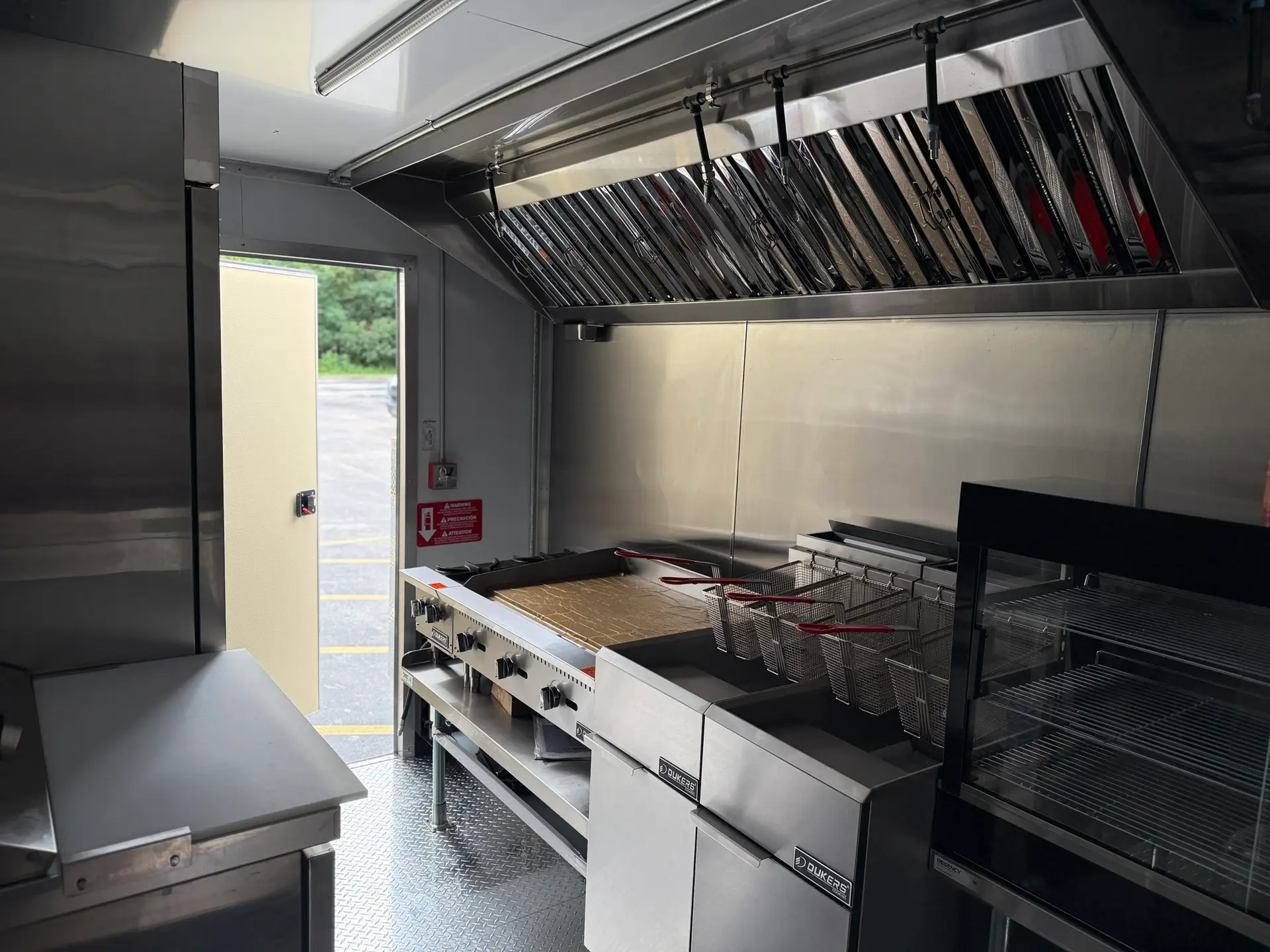
Commercial kitchen equipment - Griddle, fryer, refrigeration, three-compartment sink, hand wash sink. All NSF approved and sized to code.
Fire suppression system - Ansul or equivalent, UL-300 rated. Covers cooking area and triggers automatically. Required by Florida law.
Propane system - Quick disconnect fittings, enclosed tank cage, copper lines with proper fittings. Everything to code.
Electrical system - Generator package (usually 6500-8000 watt) plus shore power hookup for when you got electrical available. 110V and 220V service.
Water system - Fresh water tank (40-60 gallons), hot water heater, gray water holding tank (60-90 gallons). Bigger capacity than trailers since trucks have more space.
Ventilation hood - Stainless steel hood with fan and grease filters. Proper capture velocity for health department approval.
Serving window - Large pass-through window with awning. Some people want windows on both sides for events.
The truck itself - We use box trucks (Isuzu, Ford, Chevy) as the base. Either used trucks we source or new ones if you want. We handle all the title work and registration.
Custom Equipment Packages
Want different equipment? We can install whatever your menu needs.
Espresso setup for coffee trucks. Pizza oven for mobile pizzeria. Smoker attachment for BBQ. Double fryers for wings. Bigger griddles for breakfast. Display cases for baked goods. Ice cream freezers. Whatever you're selling, we'll design the truck around it.
The equipment layout matters. A taco operation needs different workflow than a burger truck. We build based on how you'll actually work, not some generic template.
Best Places to Operate Food Trucks in Kissimmee & Orlando
Food trucks do well in Orlando because there's consistent year-round traffic. Tourists, conventions, theme park workers, college students - always people looking for food.
Downtown Orlando lunch service works great. Park near office buildings from 11am-2pm. Business workers will buy lunch every day if you're convenient and consistent.
Lake Eola farmers market on Sundays brings crowds. College Park has food truck nights. The Milk District stays busy for lunch and dinner.
UCF area is money if you can get a good spot near campus. 69,000 students who buy lunch constantly. Same with Valencia campuses.
International Drive has rules about where food trucks can park but there's spots that work if you follow regulations and get proper permits.
Kissimmee has Old Town running events almost every night. Good for dinner and late-night service. The 192 corridor between Kissimmee and St. Cloud has hotels and tourist traffic.
Osceola Heritage Park hosts events 200+ days per year. If you can get approved to sell there during flea markets or shows, steady business.
Food trucks work well for events too. Corporate catering, weddings, festivals, private parties. You drive to the location, serve, drive home. No need to unhitch or leave equipment somewhere.
Florida Health Department Requirements
Every county in Central Florida has health department requirements for food trucks. We build trucks that meet Orange, Osceola, and Seminole county codes.
Orange County (Orlando, Winter Park, Apopka) - You need a mobile food dispensing vehicle permit from the health department at 6700 Conroy Windermere Rd. They inspect the truck before issuing the permit. Usually takes 2-3 weeks if everything's built right.
Osceola County (Kissimmee, St. Cloud, Celebration) - Permit office is at 1875 Boggy Creek Rd. Typically 1-2 weeks for approval. Same inspection process, sometimes faster.
Seminole County (Sanford, Altamonte Springs, Lake Mary) - Similar to Orange County. They want your commissary agreement upfront when you apply.
The inspection covers the same things everywhere. Three-compartment sink sized correctly. Hand wash sink with hot water. Fire suppression properly installed. Food-safe flooring. Refrigeration at correct temps. Ventilation hood working properly.
We've built hundreds of food trucks that passed inspection first try. Only failures we've seen are when someone modifies the truck after we deliver it.
Commissary Requirements
You need a commissary - commercial kitchen where you park the truck, do prep work, store supplies, and dump wastewater. Can't operate from your house. Against health code.
There's commissaries on Orange Blossom Trail in Orlando, near the airport in Kissimmee, and several others around Central Florida. Cost is usually $350-700 monthly depending on what services you need.
Some just provide parking and wastewater dump. Others include prep space, storage, even help with permits.
Custom Food Truck Builder Services
This is where we're different from companies just selling pre-built trucks. We design and build custom layouts based on your specific menu and how you'll actually work.
Here's the process:
Tell us what you're cooking. The equipment and layout for a coffee truck is completely different from a taco truck or BBQ truck. We need to know your menu to design it right.
We create 3D renderings showing exactly what the truck will look like inside. You see where equipment goes, how the workflow moves, where you'll stand while cooking.
Make changes if you want. Move equipment around. Swap out pieces. Add storage. Whatever works better for your operation. We adjust the design until you're happy.
Once you approve the design, we order your base truck (if you don't already have one) and start the build. Takes 3-4 weeks start to finish.
You can stop by our shop at 1726 N Kelley Ave during the build to check progress. Most manufacturers don't let you do that but we're local so why not.
Why Custom Layout Matters
Every food concept needs different setup. Trying to force every menu into the same standard layout doesn't work.
Coffee trucks need the espresso machine front and center with specific plumbing and electrical. Refrigeration for milk. Storage for beans. Display area for pastries. Not much cooking equipment.
Taco trucks need flat top griddle up front, prep space for toppings close by, refrigeration for meat and produce within reach. Fast assembly line workflow.
BBQ trucks need space for holding cooked meat (warming units), room for sides prep, less front-line cooking since the smoking happens outside the truck or in attached smoker.
Burger and sandwich trucks need griddle or grill, prep area for assembly, refrigeration nearby, fryer if you're doing fries.
The workflow has to make sense for your specific operation. That's what custom building gets you.
Custom Build Timeline
Week 1: Design and truck sourcing. We create your layout, get your approval, order the base truck if needed.
Week 2-3: Fabrication and installation. Building out the interior, installing equipment, plumbing, electrical, all the systems.
Week 4: Final assembly and testing. Install serving window, wrap if you're getting graphics, test all equipment, final inspection.
Then you pick it up. We do complete walkthrough, show you how everything works, give you all the manuals and documentation for permits.
Food Truck Manufacturing
We manufacture food trucks in-house at our Kissimmee facility. Not ordering from somewhere else and reselling. We're building them from the ground up.
Here's what our manufacturing process looks like:
Base truck preparation - We start with a box truck chassis (Isuzu NPR, Ford E-Series, Chevy P30, etc). Strip out the box if it's used. Inspect frame and mechanical. Make any repairs needed.
Interior framing - Build the interior frame structure using aluminum or stainless steel. This is what holds everything together and supports the equipment.
Wall and ceiling installation - Insulated stainless steel or aluminum walls. Sealed floor (usually stainless steel or aluminum diamond plate). Everything has to be food-safe and cleanable.
Plumbing installation - Fresh water lines, drain lines, hot water heater connections. All tested for leaks before equipment goes in.
Electrical installation - Wire for 110V and 220V service. Install breaker panel. Run lines to equipment locations. Ground everything properly. Install generator and shore power hookup.
Equipment installation - Mount griddles, fryers, refrigeration units, sinks. All professionally secured and connected. Not just sitting loose.
Fire suppression installation - Technical work that has to be done exactly right. System positioned to cover cooking area, connected to fuel shutoff, tested.
Ventilation installation - Hood mounted over cooking equipment, fan installed, ductwork connected, grease filters in place.
Serving window installation - Cut opening, install window and awning, seal everything waterproof.
Final testing - Turn on all equipment, check for issues, verify water system works, test electrical, make sure everything's sealed properly.
Quality Control
Every truck goes through inspection before delivery.
All welds and joints get checked. No weak spots that could fail.
Electrical connections tested. Everything grounded correctly, no loose wires.
Plumbing pressure tested. Can't have leaks.
Equipment function verified. Turn everything on, make sure it works right.
Door and window seals checked. Water can't get in.
Fire suppression system tested. Verify the trigger works.
If something's not right, we fix it before you pick up the truck. Not after.
Why In-House Manufacturing Matters
Because we manufacture ourselves, we control quality at every step. We're not relying on some factory in another state.
This also means faster repairs if you need them later. We built your truck. We know exactly how it's constructed. We stock parts. Bring it back and we can fix whatever needs fixing.
Some of our customers have come back for second and third trucks as their business grows. We know their operation, we know what worked on the first truck, we can improve on the next one.
Food Truck Financing Options
We work with lenders who specialize in food truck financing. They understand the business model. You're not explaining to a regular bank why you need a mobile kitchen.
Typical terms are 15-20% down payment, monthly payments for 5-7 years. Interest rates vary based on credit but usually 7-12%.
Some people use SBA loans which sometimes have better rates but take longer to approve. You need a solid business plan and good credit.
If you got decent credit and some money saved, approval usually takes 1-2 weeks. Then we start building once financing clears.
Food Truck vs Food Trailer - Which Should You Buy?
People ask this constantly. Here's the real difference.
Food truck is a complete vehicle. Everything's built into one unit that you drive. Self-propelled. You get in, start it up, drive to your location. Park, open the serving window, start cooking.
Food trailer is something you tow behind your own vehicle. You need a truck that can pull it. You hitch up, tow it to location, unhitch, set up, then you can work.
When to Choose a Food Truck
You move locations frequently during the day. Breakfast spot 7-10am, lunch location 11am-2pm, dinner spot 5-9pm. A truck makes this way easier. Just drive between locations. No hitching and unhitching.
You want professional appearance. Food trucks look more legit than trailers. Better for upscale events, corporate catering, areas where image matters.
You don't have a vehicle that can tow. If you don't already own a truck capable of pulling a trailer, buying a food truck makes more sense than buying a truck AND a trailer.
You're doing a lot of events. Food trucks are easier to position at festivals, fairs, corporate events. Drive in, park, serve, drive out.
When to Choose a Food Trailer
You already have a truck that can tow. Why pay for another vehicle if you got something that works?
You stay in one spot mostly. If you're setting up at the same location for weeks or months, a trailer works fine. No need for the truck to be mobile.
You want to leave the kitchen at a location. With a trailer, you can unhitch and drive your truck home. Leave the trailer set up at an event or regular spot. Can't do that with a food truck.
Operating Differences
Food trucks use more gas. You're driving a bigger, heavier vehicle. Expect 8-12 mpg.
Food trucks cost more to insure. Commercial vehicle insurance plus business liability. Usually $3,500-$5,000 per year.
Food trucks need more maintenance. It's a vehicle with an engine, transmission, brakes. Regular truck maintenance plus kitchen maintenance.
Food trailers are simpler mechanically. Just the trailer itself and the kitchen equipment. Less stuff that can break.
Both need commissary, permits, same health department requirements. That part's identical.
Warranty and Support
Every food truck comes with one-year warranty on all equipment. Something breaks during that first year, we fix or replace it.
After warranty ends, we still help. We're local at 1726 N Kelley Ave. Bring the truck back for repairs. We keep parts in stock.
A lot of customers call months or years later with questions. How to fix something. Where to find parts. We answer the phone and help however we can.
Some customers have bought multiple trucks from us as they expand. Started with one truck, business grew, came back for a second one to serve different location or different menu.
Common Questions About Food Trucks
How long does a food truck last?
The kitchen equipment lasts 10-15 years with proper maintenance. The truck itself depends on the base vehicle and how well you maintain it. 10-20 years is typical for the chassis.
What kind of gas mileage do food trucks get?
Expect 8-12 mpg depending on the size. They're heavy vehicles with kitchen equipment inside. Not fuel efficient but that's the trade-off for mobility.
Do I need a special license to drive a food truck?
Usually no. Most food trucks are under 26,000 pounds so regular driver's license works. If you go bigger you might need CDL but that's rare.
Can I park a food truck at my house?
Depends on your city and HOA rules. Many residential areas don't allow commercial vehicles parked on the street or in driveways. Check local rules.
What if I want to sell the food truck later?
Used food trucks hold value pretty well if maintained. We sometimes help customers sell when they're upgrading or getting out of the business.
Can I add equipment later?
Yes but you'll need to get the truck re-inspected by health department after modifications. Bring it back, we'll install whatever you need, then you get it approved again.
What's the biggest mistake people make?
Going too small to save money. Then six months later they can't fit all the equipment they need. Start with enough space for your menu to grow.
Getting Started
Ready to buy a food truck in Kissimmee & Orlando? Here's what to do.
Visit our shop at 1726 N Kelley Ave in Kissimmee. We're open Monday-Saturday 7:45 AM to 7:00 PM, Sunday 10:00 AM to 5:00 PM. Walk-ins welcome.
Bring your menu ideas or at least tell us what you want to cook. We'll show you what size truck makes sense, what equipment you need, give you an exact price.
Or call (689) 237-5310. Talk to our team. Ask questions. We answer during business hours.
Most people who visit don't know much about food trucks yet. That's normal. We explain everything - sizing, equipment, permits, financing, truck vs trailer decision, the whole process.
We don't do high-pressure sales. You tell us what you want, we give you options and prices, you decide if it makes sense.
If you're ready to move forward, we design your layout. Takes a day or two to create 3D renderings. You review them, make changes, approve the final design. Then we start building.
Three to four weeks later your food truck's ready. Pick it up, we walk you through everything, and you're ready to start getting permits and making money.
Come see us or call. Let's build your food truck.
Targeted at entrepreneurs looking for food trucks for sale, our services deliver exactly what the customer needs—quickly, efficiently, and done with high quality materials and workmanship to ensure your vehicle is reliable, compliant, and primed for profitability. With all operations conducted right here in the state, we provide local accessibility and expert guidance for food business starters, vendors, and operators. From versatile street food setups to specialized concession trucks, our food truck sales feature durable designs that help you navigate and succeed in the fast-paced food industry.